Answering the driveway battery-drain question first

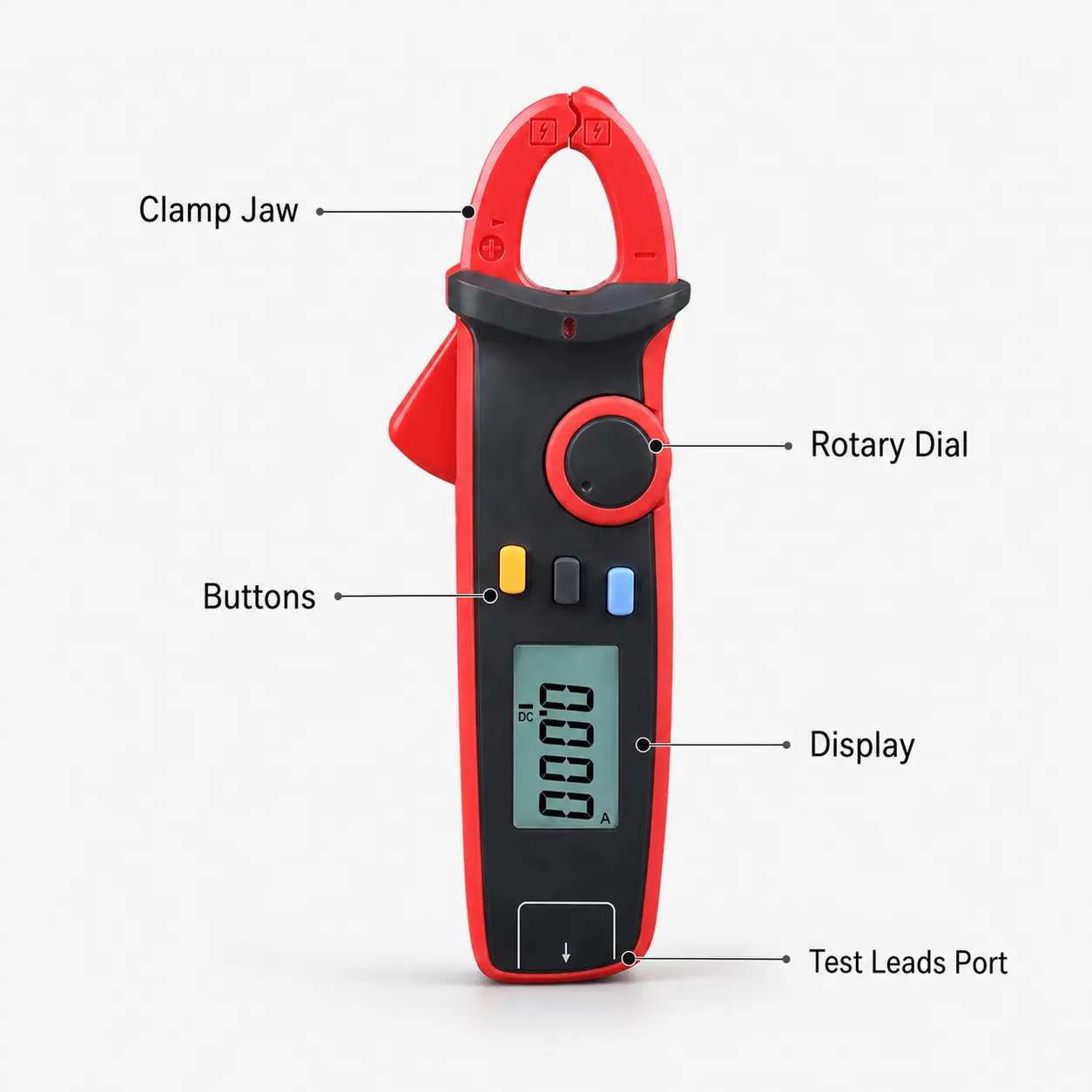
If you are searching for a DC clamp meter for parasitic draw UK, the key buying point is simple: choose a clamp-style meter that is positioned for DC current checks, not an AC-only clamp meter meant mainly for mains work. For a vehicle that keeps going flat on a driveway, workshop apron or small garage bench, the useful job is to clamp around one battery or earth conductor and look for current draw without disconnecting the circuit. The Compact DC Clamp Meter listed here is a UNI-T product locked to the UT210E configuration, with compact workshop and vehicle maintenance positioning.
That does not mean the meter is a magic answer to every flat-battery fault. A parasitic draw check still depends on method: the vehicle has to settle, the clamp has to go around one conductor rather than a whole cable bundle, and the reading has to be treated as a starting point for further checks. The buyer decision is therefore less about chasing dramatic claims and more about avoiding the wrong tool. If your immediate fear is blowing a cheap inline multimeter fuse or waking the car by disconnecting the battery, a compact DC clamp format is a sensible category to consider.
Where the job happens in a UK garage or parking space
This is usually not a tidy laboratory job. It happens on a terraced-street parking bay in Leeds, a shared block car park in Bristol, a home garage in Kent or a mobile mechanic’s van pulled up beside a customer’s car. The vehicle may have stood for a week, the charger may already have been used, and the owner is trying to work out whether the drain is real before paying for deeper diagnosis. In that setting, a clamp-style current tool is attractive because it keeps the battery circuit intact while the first check is made.
The same job appears around campervans, older 4x4s, classic cars and hobby vehicles with added stereos, alarms, trackers, leisure wiring or controllers. Those vehicles often sit longer between drives, so a small always-on load can become a practical nuisance even before anyone knows which accessory is involved. A compact clamp meter suits the early stage of that workflow: confirm whether current is being drawn, then decide whether to move on to fuse isolation, accessory checks or professional electrical help.
What to check against the documented product facts
The documented facts for this product are deliberately narrow. It is a Compact DC Clamp Meter from UNI-T, locked to the UT210E configuration, presented as a clamp-style electrical measurement tool in a compact format for workshop and vehicle maintenance listings. The public copy does not add unsupported range, accuracy, certification or performance statements. That restraint matters, because parasitic draw buying pages often become cluttered with claims that sound useful but are hard for a buyer to verify from the listing itself.
Use those facts as your filter. First, the tool must be a DC clamp meter rather than an AC-only clamp meter. Second, the clamp format should match the non-invasive job: measuring current around a conductor without opening the circuit. Third, the compact positioning should suit the place you expect to work, such as a garage bench, tool bag, van drawer or awkward vehicle battery area. If you need a published measurement range, jaw opening size, included accessories or detailed technical specifications, those are not present in the supplied public facts and should be checked on the product page before purchase.
Why DC clamp capability matters for parasitic draw checks
A normal multimeter can measure current only when it is placed into the circuit in the correct way, which usually means disconnecting something and routing current through the meter. That can be awkward on a vehicle because disconnecting the battery may reset electronics, wake modules, disturb alarms or create the very conditions that make the reading less useful. It can also put the meter fuse at risk if the setup is wrong. A clamp meter is different because the jaws are used around a conductor instead of making the meter part of the circuit.
The important detail is DC current. Many clamp meters are bought for household or trade AC work, and an AC-only clamp is not the right answer for a car battery drain question. Vehicle battery-drain work is a DC current job, so the phrase “DC clamp meter” is not decoration; it is the core requirement. The Compact DC Clamp Meter’s public positioning supports that buying direction, but the buyer should still check the exact live product page if they need more technical detail than the frozen listing provides.
A practical sequence at the battery or earth lead
Start with the vehicle in the most stable condition you can manage. Park it safely, switch off obvious loads, remove chargers or accessories that are not part of the question, and avoid opening doors or pressing the remote once the check has begun. Modern vehicles can wake circuits when a door, bonnet switch, keyless entry system or interior light is triggered, so the first lesson is patience. The clamp reading is only meaningful if the vehicle is in the state you are trying to measure, not freshly disturbed by the test process.
The working sequence is: select the DC current function; zero the clamp if the meter requires it; put the jaws around one battery cable or one earth lead only; keep the jaws fully closed; wait for the vehicle to settle; then note whether a draw appears worth investigating. Do not clamp around both live and return conductors together, because opposing current paths can cancel out and make the result look wrong. If the reading suggests a continuing draw, use it as the start of a circuit hunt rather than a final diagnosis.
Common mismatches that make this the wrong buy
Do not buy a DC clamp meter for parasitic draw work if you actually need a fully specified professional diagnostic instrument with documented range, resolution, accuracy and calibration information in front of you before ordering. The frozen public facts supplied here do not include those details. That does not make the product unsuitable by itself; it means this article cannot honestly promise small-current performance, certification status or diagnostic certainty. Buyers who must record measurements for formal workshop paperwork should check the manufacturer and seller documentation directly.
It may also be the wrong first tool if the vehicle fault is intermittent over several days, linked to water ingress, or triggered only by a module that wakes at random. A clamp meter can help with a snapshot check, but it does not replace patient fault tracing. Tight wiring bundles can also make any clamp awkward if there is no single accessible conductor. If the battery area is cramped or the cable is hidden inside a loom, you may still need a different testing approach or a technician with vehicle-specific diagnostic equipment.
Checklist for comparing this compact clamp meter with your task
Use this checklist before deciding. Surface and setting: will you be working on a driveway, garage bench, mobile van or workshop corner where a compact clamp tool is easier to handle than a larger meter? Setup: are you comfortable selecting DC current, zeroing the clamp where needed, and clamping one conductor only? Content of the job: are you trying to confirm the presence of current draw before pulling fuses or checking accessories, rather than expecting one reading to name the faulty component? Environment: can you keep the vehicle asleep long enough to take a meaningful look?
Then check the documented product facts. The item is a UNI-T Compact DC Clamp Meter, locked to the UT210E configuration, presented in clamp-style electrical measurement format and positioned for workshop and vehicle maintenance listings. The public facts do not list kit contents, exact dimensions, jaw capacity, measurement range or aftercare instructions. If any of those are deal-breakers for your vehicle, confirm them on the live product page before buying. If the main problem is simply avoiding an AC-only clamp and avoiding inline current testing at the first stage, the documented positioning is aligned with that task.
Next step for a buyer with a flat car, van or camper
The grounded next step is to decide how much certainty you need before purchase. If you need a compact DC clamp-style tool for an initial non-invasive current check on a vehicle battery or earth lead, the Compact DC Clamp Meter is positioned for that kind of workshop and vehicle-maintenance task. The listed price is £70.57, with VAT included in the supplied commerce data. The supplied policy information also states Free UK Delivery, 1–3 business days processing, 2–4 business days delivery after dispatch, and a 30-day return window.
Before ordering, line the tool up with the actual vehicle job. If you have a car on a Manchester driveway with a suspected alarm drain, a camper in a Cardiff storage yard with leisure-electrics questions, or a classic in a Sheffield garage with an added stereo, the first check is the same: confirm the tool is the DC clamp meter you meant to buy, then use it as a careful starting point. If the result points to a draw you cannot isolate confidently, stop guessing and move to fuse-by-fuse tracing or professional help.