
Short answer: A car battery drain clamp meter can provide a first observation of DC current around one battery-related conductor without disconnecting that conductor, provided the meter's documented limits and the vehicle procedure are followed. The listed product is locked to the UNI-T UT210E configuration, whose instructions require DC selection, zeroing and a single wire centred in fully closed jaws. Prepare a repeatable vehicle state, record what is switched on or recently disturbed, and treat the display as evidence for the next diagnostic step. The manufacturer does not specify a universal acceptable drain value, a waiting time for every vehicle or a fault-identification function.
Define the flat-battery pattern first
Before measuring, note when the battery goes flat, whether the vehicle has recently been charged, and what accessories or repairs changed beforehand. This history cannot prove a cause, but it prevents the meter reading from being separated from the condition that prompted the test.
A discharged battery may have more than one explanation. A clamp meter observes current under the test conditions; it does not assess battery capacity, charging-system performance or the condition of every connection.
- Vehicle and battery identification
- Time since the last drive or charge
- Recent accessory, alarm, stereo or wiring changes
- Doors, bonnet, key and charger state during the observation
- The exact conductor and meter mode used
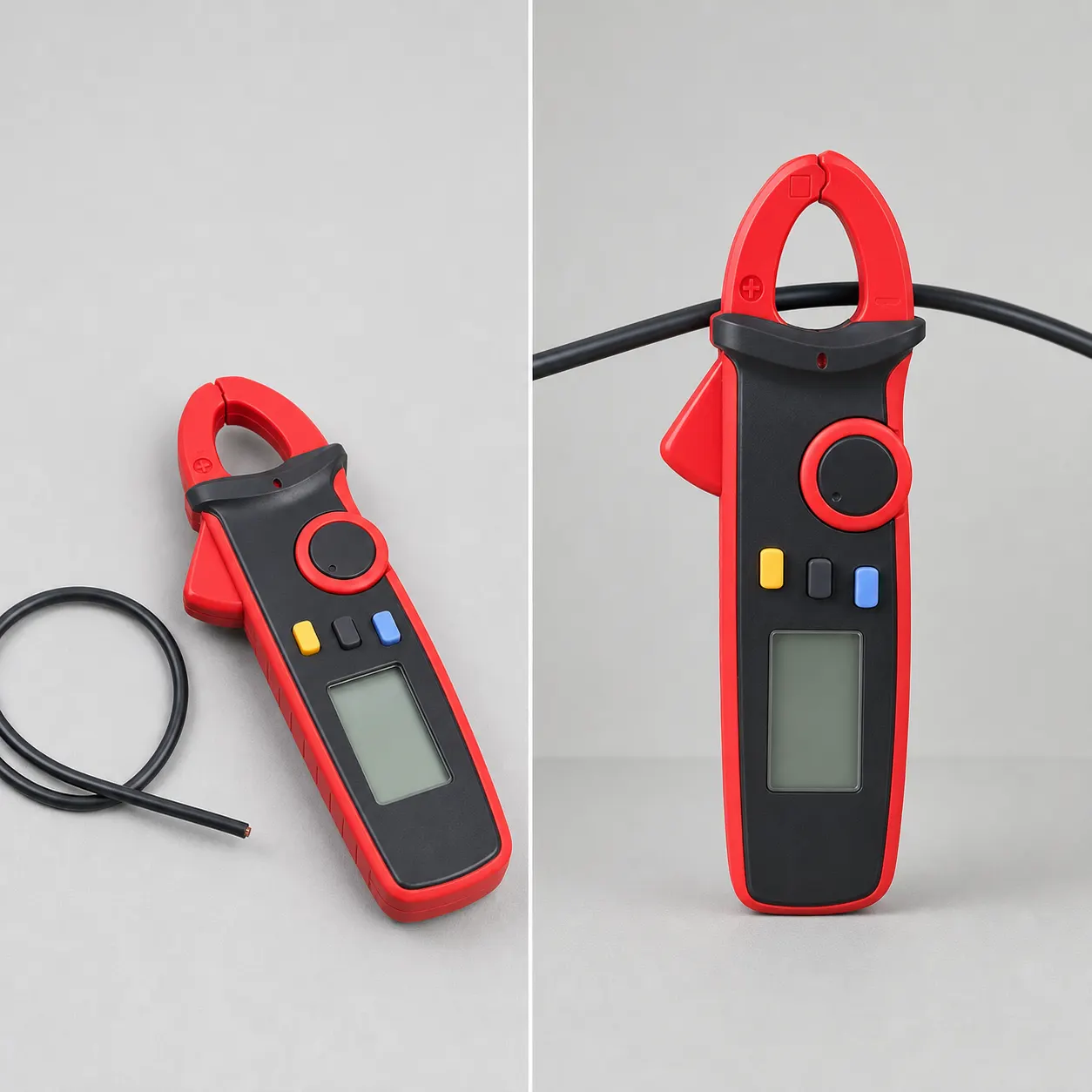
Create a repeatable clamp observation
Follow the current UNI-T manual rather than a generic battery-drain shortcut. Select the documented DC current function, zero the meter, place one conductor centrally and close the jaws completely. Avoid changing the vehicle state while waiting for a comparable reading.
- Confirm the UT210E range and method cover the expected circuit before starting.
- Set a stable vehicle condition and note anything that may wake electrical systems.
- Zero the DC current display away from the conductor as the manual directs.
- Clamp the intended single conductor and verify complete jaw closure.
- Record the displayed value and any event that changes it.
Use changes to guide the next question
A stable or changing display can help decide whether further investigation is justified, but it cannot name the responsible circuit. Use vehicle service information for any isolation sequence, and change one controlled condition at a time so the record remains interpretable.
Do not disconnect unfamiliar components, defeat safety systems or pull fuses from a live high-current circuit because a blog suggested it. The appropriate next step depends on the vehicle architecture and the competence of the person doing the work.
Limits of a battery-drain clamp check
The manufacturer does not specify a universal normal drain, sleep interval, minimum detectable vehicle fault, logging function or guarantee that an intermittent event will be captured. It also does not specify high-voltage hybrid or electric-vehicle approval on the retailer page.
HSE guidance supports checking the instrument's rating, condition and available working space before electrical measurement. Stop if the expected current, conductor identity or safe access is uncertain, and use the vehicle manufacturer's procedure or qualified assistance.
| Result | What it can support | What it cannot prove |
|---|---|---|
| Repeatable displayed current | A recorded condition exists for further checks | Which component caused it |
| Reading changes after an event | That event may deserve controlled investigation | That the event is the only fault |
| Low or unstable display | The test may need review against the manual | That no intermittent drain exists |
Related guides and product details
Use this clamp meter for a documented first observation, then rely on the vehicle's service information for thresholds, isolation and repair decisions. Read DC Clamp Meter for Car Battery Drain: UK Checklist for related guidance. Read DC Clamp Meter for Parasitic Draw: UK Method for related guidance. Review the documented specification on the Compact DC clamp meter (UT210E configuration) product page before ordering.
Sources and safety context
- Supports the UT210E configuration and vehicle-maintenance positioning. Current Amperemeter product page.
- Supports the documented DC clamp-current setup and conductor placement. UNI-T UT210E User Manual.
- Supports checking equipment rating, physical condition and the working area. Electrical test equipment for use by electricians GS38.